
 There has been much ado about hospital death rates lately, much of it focused on the Mid Staffs hospitals, where consistently high apparent death rates were repeatedly brushed aside and ignored. The issue at stake was the validity - or not - of certain statistics produced by Sir Jar and his operatives at HI5, the Dr Foster Intelligence Unit, and one statistic in particular, the HSMR.
The HSMR, or Hospital Standardised Mortality Ratio to give it its full name, is said by Sir Jar to offer a useful marker of a hospital’s performance, by providing a single figure that summarises how many patients leave the hospital feet-first. High value HSMRs suggest more stiffs than expected, low HSMRs indicate less stiffs than expected, compared to national figures. Unfortunately for Sir Jar, the method – quite apart from a myriad of other factors that might compromise validity - he uses to determine HSMRs suffers from a flaw that severely restricts its application. While an isolated HMSR can be compared to the ‘big picture’ – in other words, the standard population to which it is being compared - comparisons between hospitals, or even the same hospital over time, are prone to errors, which can render the results at best meaningless, at worst misleading.
 Dr No is hopeless with numbers. Just being in the presence of statisticians causes a pressure of incomprehension to build up in his head. When they start to talk numbers, it is as if they are speaking in tongues; and when their chalk squeaks on the blackboard, all he sees is so many hieroglyphics.
 One of the most bizarre facts about modern medicine is that most of the time, for most people, most drugs don’t work. Naturally, this is something that Big Pharma is keen to keep hidden. Even most doctors are only dimly aware that most of the drugs they peddle might not always be what they are cracked up to be. At a time when drug companies and doctors are pushing ever more pills onto ever more patients, we should perhaps be a little more savvy about the pharmaceutical pact we enter into when we agree to pop pills.
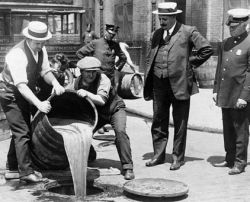 Sir Liar ‘Tombstone’ Swansong, ex-CMO-elect, has let it be known that he intends to use his retirement to persuade government to impose a binding minimum price for alcohol, in the hope of curbing alcohol related harm. A figure of 50p per unit sold has been suggested – which would raise the minimum price for a bottle of 12% ABV wine to £4.50, up some 50% on today’s minimum prices.
 What two things do sex and statistics have in common – apart, that is, from both starting with the letter S? The answer, of course, is firstly that in both, bigger is usually butt (sic) not always better, and secondly that both can be massaged to make things, err, stand out more.
 We are drowning in number soup again.
 One of the more striking changes in medicine in recent years has been the increasing use of - and reliance on - numbers. Now, cosying up to numbers is all very well, as long as you understand them. Most doctors do not.